


Small differences in tooth length, shape, or surface texture can affect the balance of your entire smile. Cosmetic tooth contouring provides a conservative option for refining minor imperfections without adding a restoration to the tooth.
At Riverton Heights Dental Care, Dr. Cory Fabrizio, DMD provides cosmetic tooth contouring in Riverton, Utah as part of our personalized cosmetic dentistry services. Before recommending treatment, Dr. Fabrizio evaluates the condition of your teeth, the thickness of the available enamel, your bite, and the amount of reshaping needed.
Because enamel removal is permanent, treatment is carefully planned and limited to changes that can be made without unnecessarily weakening the tooth.
Schedule a cosmetic tooth contouring consultation.

What Is Cosmetic Tooth Contouring?
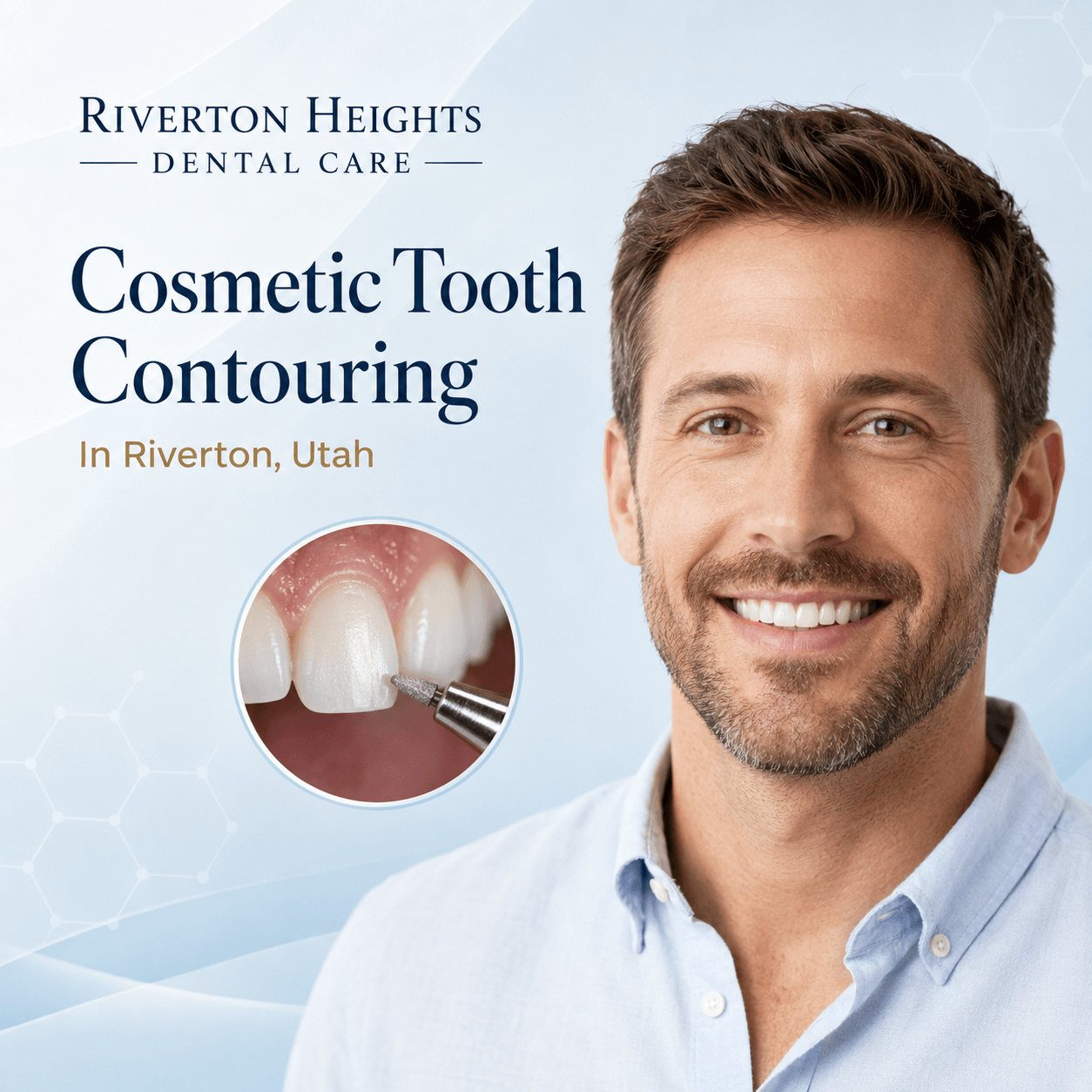
Cosmetic tooth contouring, also known as tooth reshaping or enameloplasty, is a procedure that removes very small amounts of enamel to improve the shape, length, or surface of a tooth.
Your dentist uses precise dental instruments to smooth selected areas and create a more even appearance. Treatment is intended for subtle changes rather than major alterations to tooth size, position, or structure.
Unlike dental bonding, which adds tooth-colored resin, contouring improves tooth shape by removing a limited amount of existing enamel. This distinction makes a dental evaluation especially important before treatment.
What Can Tooth Contouring Improve?
Cosmetic contouring in Riverton, Utah may be considered for relatively minor concerns such as:
- Slightly uneven tooth edges
- Small or shallow chips limited to enamel
- Teeth that appear slightly too long
- Pointed or irregular tooth shapes
- Minor differences in length between neighboring teeth
- Small pits, bumps, or surface irregularities
- Rough edges that affect the appearance of a tooth
- Slight overlapping that can be improved through limited reshaping
- Minor asymmetry affecting the visible teeth
The procedure cannot correct every type of cosmetic concern. Larger fractures, substantial gaps, significant misalignment, deep discoloration, or weakened teeth may require a different cosmetic, restorative, or orthodontic treatment.
Who May Be a Candidate for Enameloplasty?
A suitable candidate generally has healthy teeth and gums, enough enamel to permit minor reshaping, and a concern that can be corrected through a small reduction in tooth structure.
Your dentist will consider:
- The thickness and condition of your enamel
- The depth of any chip or surface defect
- Existing tooth sensitivity
- Tooth decay or structural damage
- The position of the tooth
- How your upper and lower teeth come together
- Clenching or grinding habits
- The amount of reshaping requested
- Your cosmetic goals and expectations
Tooth contouring may not be recommended when enamel is already thin, a tooth is significantly damaged, the requested change would expose dentin, or reshaping could negatively affect the bite.
If contouring is not appropriate, your dentist can explain other treatments that may provide a safer or more effective result.

What Happens During a Tooth Contouring Consultation?
Your consultation begins with a discussion about the specific teeth you would like to change. It can be helpful to point out the edges, shapes, or differences that concern you rather than requesting a procedure based solely on its name.
Your dentist will examine the tooth and surrounding area to determine if the concern is limited to the enamel. The evaluation may also include reviewing the tooth’s position, checking your bite, and determining how much enamel can safely be adjusted.
- Which areas may be reshaped
- How noticeable the expected change may be
- The limitations of contouring
- The amount of enamel that may be removed
- Possible sensitivity or other risks
- Treatments that may provide a better result
- The anticipated cost
This evaluation helps ensure that contouring is selected for a clinically appropriate reason and that the expected outcome is realistic.
The Cosmetic Tooth
Contouring Procedure
Planning the Shape
Your dentist identifies the areas that can be adjusted while preserving healthy tooth structure. Tooth length, surrounding teeth, smile symmetry, and bite contact may all be considered.
Reshaping the Enamel
A small amount of outer enamel is carefully removed using dental instruments. The goal is to make controlled, subtle adjustments rather than dramatically changing the tooth.
Smoothing and Polishing
After reshaping, the treated surface is smoothed and polished. Your dentist may evaluate the appearance and your bite before completing the procedure.
Because enamel itself does not contain nerves, anesthesia may not be necessary for limited contouring. Individual sensitivity and treatment needs vary, so your dentist will discuss comfort considerations before starting.
Tooth Contouring Compared With Dental Bonding
Tooth contouring and bonding can both improve minor irregularities, but they accomplish this in different ways.
Tooth Contouring
- Removes a small amount of enamel
- Best for reducing or smoothing minor areas
- Does not add a dental material
- Limited by available enamel
- Changes are permanent
Dental Bonding
- Adds tooth-colored composite resin
- Best for filling, building up, or covering areas
- Requires a bonded dental material
- Can make a tooth appear larger or longer
- Bonding may wear, stain, chip, or need replacement
A tooth that appears slightly too long or pointed may benefit from contouring.
A tooth that is too short, has a deeper chip, or needs added volume may be better suited to dental bonding.
In some cases, the two procedures may be combined to create a more balanced result.
Other Alternatives to
Tooth Contouring
Your dentist in Riverton, Utah, may discuss another option when contouring cannot safely produce the desired change.
Dental Bonding
Bonding may be appropriate for small gaps, chips, uneven shapes, or teeth that need additional tooth-colored material.
Dental Veneers
Dental veneers cover the visible front surfaces of selected teeth. They can address more extensive concerns involving tooth shape, size, spacing, and discoloration but involve a greater treatment commitment.
Professional Teeth Whitening
If color is the primary concern, professional teeth whitening may be more appropriate because contouring does not change the internal color of enamel.
Restorative Dental Care
A tooth with decay, a substantial fracture, or significant loss of structure may require a filling, crown, or another restorative dentistry service.
Orthodontic Treatment
Contouring can create a slight visual improvement in selected cases, but it does not move teeth. Orthodontic treatment may be more appropriate when alignment or bite position is the main concern.
Recovery and Aftercare
Most patients can return to their normal routine following limited tooth contouring. No surgical recovery is involved.
Temporary sensitivity to hot or cold temperatures may occur, although not every patient experiences it. Contact our office if sensitivity is severe, persists, or becomes worse.
To care for your teeth after contouring:
- Brush twice daily using fluoride toothpaste
- Floss or use another interdental cleaner every day
- Avoid biting hard objects or using teeth as tools
- Attend regular dental examinations and cleanings
- Tell your dentist about clenching or grinding
- Contact the office if the tooth develops pain or feels different when biting
Because contouring changes the natural enamel rather than placing a restoration, the reshaped area does not require replacement. The tooth still needs normal preventive care and protection from decay, erosion, damage, and wear.
Can Contouring Be Combined With Other Cosmetic Treatments?
Yes. Tooth contouring may be included in a broader cosmetic dentistry plan when more than one concern affects the smile.
Examples may include:
- Contouring uneven edges after professional whitening
- Combining contouring and bonding to balance tooth shapes
- Reshaping selected neighboring teeth to complement a veneer
- Smoothing minor irregularities as part of an overall smile plan
Treatment order matters. Your dentist will plan each procedure so that changes in tooth color, shape, and proportion work together.
Why Choose Riverton Heights Dental Care?
Riverton Heights Dental Care provides cosmetic, general, and restorative dental services in one Riverton office. This allows our dentists to consider the appearance, health, strength, and function of your teeth before recommending cosmetic treatment.
Dr. Cory Fabrizio focuses on individualized care instead of recommending the same solution for every cosmetic concern. For tooth contouring, this means determining if enamel can be adjusted conservatively and explaining other options when reshaping is not appropriate.
Our approach includes:
- An individual dental evaluation before treatment
- Conservative planning focused on preserving enamel
- Clear explanations of expected benefits and limitations
- Comparison with bonding, veneers, and restorative options
- Modern dental instruments and current techniques
- Cosmetic and preventive care in the same practice
- A welcoming office serving Riverton and nearby communities
Cosmetic Tooth Contouring Cost
The cost of tooth contouring depends on the number of teeth treated, the amount of reshaping required, and any additional services included in the treatment plan.
Because contouring is often considered an elective cosmetic procedure, insurance coverage may be limited. Coverage depends on your specific dental plan and the clinical reason for treatment.
After evaluating your teeth, our team can explain the anticipated cost and available payment choices. Riverton Heights Dental Care accepts cash, checks, credit cards, and CareCredit. Visit our financial options page for additional information.
Request a Tooth Contouring Consultation in Riverton, Utah
If a small chip, pointed edge, or minor difference in tooth length is affecting your smile, schedule a consultation at Riverton Heights Dental Care. Our dental team can determine if cosmetic tooth contouring can provide the change you want without removing an inappropriate amount of enamel.
If another treatment would better protect the tooth or provide a more predictable result, we will explain those alternatives.
Riverton Heights Dental Care
3693 W. 13400 S., Suite B
Riverton, Utah 84065
Phone
(801) 781-5784
Office Hours:
Monday–Thursday: 8:00 a.m.–5:00 p.m.
Friday–Sunday: Closed
Cosmetic Tooth Contouring FAQs
Is Tooth Contouring Painful?
Enamel does not contain nerves, so limited enamel reshaping is generally comfortable and may not require anesthesia. Comfort can vary based on enamel thickness, existing sensitivity, and the area being treated.
Is Tooth Contouring Permanent?
Yes. Enamel removed during contouring does not grow back. The procedure should be considered permanent even when only a small amount of enamel is adjusted.
Can Tooth Contouring Fix a Chipped Tooth?
Contouring may smooth a very small, shallow chip limited to the enamel. A deeper chip, crack, or structurally damaged tooth may require bonding or restorative treatment.
Can Tooth Contouring Make Teeth Shorter?
A tooth that appears slightly longer than adjacent teeth may sometimes be shortened through conservative contouring. The amount of adjustment is limited by enamel thickness, tooth structure, and bite considerations.
Can Contouring Straighten Crooked Teeth?
Contouring does not move or straighten teeth. It may create a slight visual improvement when an edge or minor overlap makes a tooth appear uneven. More substantial alignment concerns require an orthodontic evaluation.
How Long Does Tooth Contouring Take?
Minor contouring may be completed during one appointment. Appointment length depends on the number of teeth involved and the amount of reshaping planned.
How Long Do the Results Last?
Because the natural tooth is reshaped, the change does not wear off like an applied dental material. However, teeth can still experience erosion, chipping, grinding, and other changes over time.
How Much Does Tooth Contouring Cost in Riverton?
Cost depends on how many teeth require treatment and the complexity of the planned changes. The office can provide a relevant estimate after a dentist examines your teeth.