


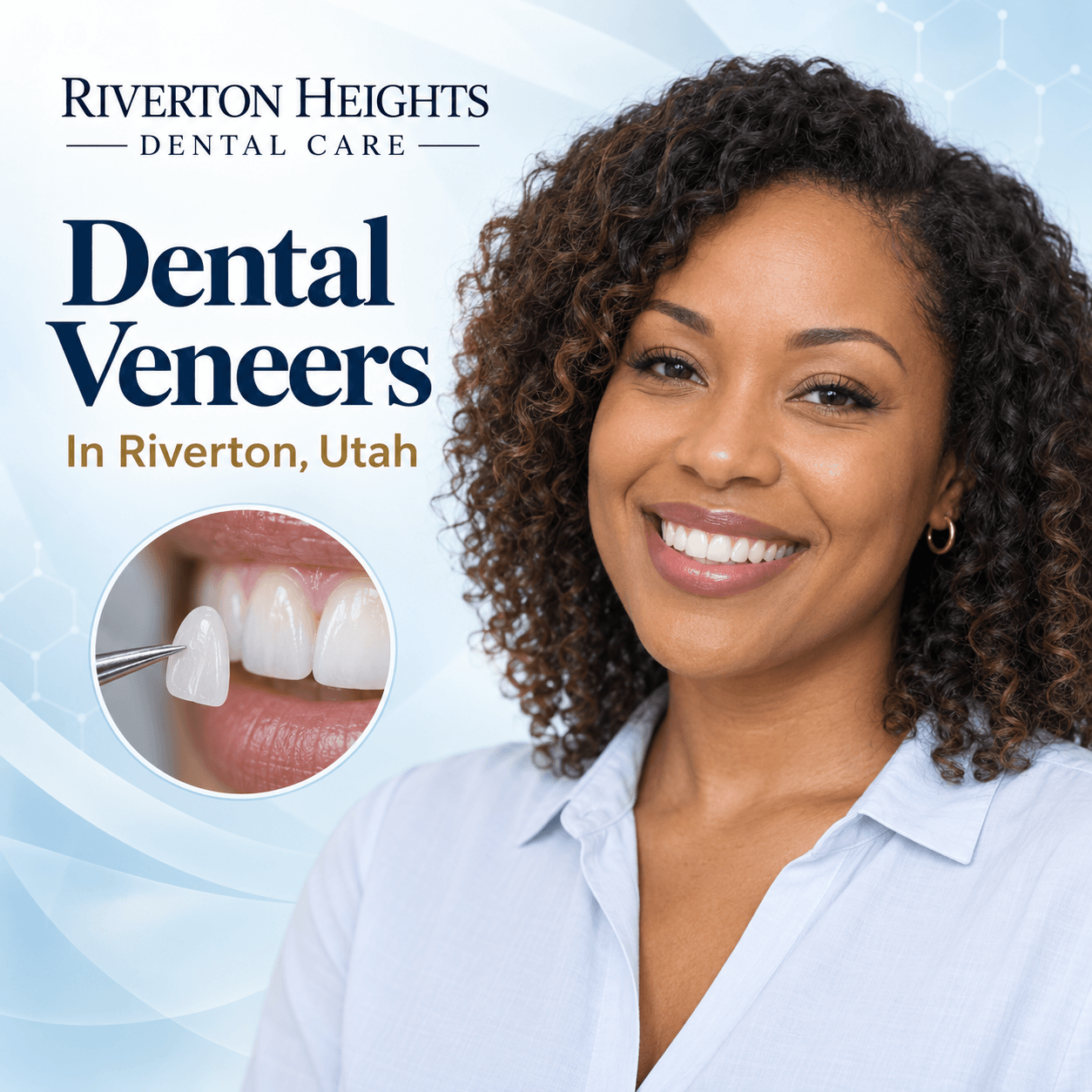
Chipped, deeply discolored, worn, uneven, or widely spaced teeth can affect the balance of your smile. Dental veneers cover the visible front surfaces of selected teeth to change their shape, size, color, and proportion.
At Riverton Heights Dental Care, Dr. Cory Fabrizio provides personalized dental veneer consultations in Riverton, Utah. Our dentists evaluate your teeth, gums, bite, and cosmetic goals before recommending treatment. This helps determine if veneers can produce an appropriate result or if a more conservative option would better preserve your natural teeth.
Veneers involve a greater treatment commitment than whitening or minor dental bonding. You will receive clear information about the process, expected results, limitations, cost, and alternatives before deciding to proceed.
Schedule a dental veneers consultation.

What Can Dental Veneers Improve?
Veneers may be considered when one or more visible teeth have cosmetic concerns that cannot be corrected predictably with whitening or minor reshaping.
Dental veneers may improve the appearance of:
- Deep or persistent tooth discoloration
- Chipped front teeth
- Worn or shortened teeth
- Irregularly shaped teeth
- Small or narrow teeth
- Gaps between selected teeth
- Uneven tooth edges
- Minor cosmetic misalignment
- Differences in tooth size or proportion
- Multiple cosmetic concerns affecting the same tooth
- Existing cosmetic work that no longer matches the smile
Veneers do not treat active tooth decay, gum disease, severe structural damage, or major bite problems. These conditions may need to be addressed before cosmetic treatment begins.
What Are Dental Veneers?
Dental veneers are thin, customized coverings bonded to the front surfaces of teeth. They are designed to alter the visible shape, size, shade, or proportion of the treated teeth while leaving much of the natural tooth intact.
Veneers may be made from porcelain or tooth-colored composite material. Material availability and suitability can affect tooth preparation, treatment timing, appearance, maintenance, repair options, and cost, so your dentist will explain which choices apply to your treatment plan.
Each veneer is planned with attention to:
- Tooth shape and length
- Shade and translucency
- Surrounding natural teeth
- Facial and smile proportions
- Gumline
- Bite contact
- Available enamel
- The patient’s cosmetic goals
The goal is not to create identical teeth. A natural-looking result should complement the patient’s existing features and surrounding smile.
Who Is a Candidate for Dental Veneers?
Veneers may be appropriate for adults with healthy gums, adequate natural tooth structure, and cosmetic concerns affecting the front surfaces of their teeth.
Your dentist will evaluate:
- The health of your teeth and gums
- The amount and quality of available enamel
- Existing fillings or restorations
- Tooth alignment
- Bite forces
- Tooth grinding or clenching
- The severity of any chip, crack, or wear
- The number of teeth being considered
- Your expectations for color, shape, and symmetry
A healthy enamel surface can be important because veneers are commonly bonded to enamel. Treatment may be less predictable when too little healthy enamel remains.

What To Expect From A Dental Veneer Consultation
Your consultation begins with a conversation about what you want to change. Rather than selecting veneers based only on photos or general information, your dentist will evaluate the condition of your individual smile.
The consultation may include:
- Reviewing the teeth that concern you
- Examining your teeth, gums, enamel, and existing restorations
- Evaluating bite contact and tooth position
- Discussing the amount of change you want
- Comparing veneers with more conservative alternatives
- Explaining tooth preparation and reversibility
- Reviewing the expected treatment sequence
Tell your dentist if you prefer a very subtle change or a more noticeable transformation. This information helps guide the shape, shade, and overall treatment plan.
The Dental Veneer
Process
The exact process depends on the veneer material, number of teeth, condition of your smile, and treatment plan. Porcelain veneer treatment commonly requires multiple stages.
Planning Your Smile
Your dentist evaluates tooth shape, shade, alignment, gumline, and bite. The number of veneers and their intended appearance are discussed before tooth preparation begins.
If you want to whiten untreated teeth, whitening may need to occur first. Veneers do not respond to whitening products after placement.
Preparing the Teeth
A small amount of enamel may be removed from the front and edge of each treated tooth to create space for the veneer and provide a suitable fit.
The amount of preparation varies. Because removed enamel does not grow back, your dentist should explain the planned changes before treatment.
Impressions and Temporary Veneers
Impressions or digital scans may be taken to create the final veneers. Temporary veneers may be placed while laboratory-made restorations are being completed, depending on the treatment plan.
Temporary veneers may look or feel different from the final restorations. Your dental team will provide instructions for caring for them.
Evaluating Fit and Appearance
When the final veneers are ready, your dentist evaluates their shape, shade, fit, and relationship with the surrounding teeth. You may be able to review their appearance before final bonding.
Bonding the Veneers
The teeth and veneer surfaces are prepared, and the veneers are bonded in place. Your dentist then checks the margins and bite and makes any necessary adjustments.
A follow-up visit may be recommended to evaluate comfort, bite, gum response, and overall appearance.
Your Dental Veneer Consultation In Riverton, Utah
Your consultation begins with a conversation about what you want to change. Rather than selecting veneers based only on photos or general information, your dentist will evaluate the condition of your individual smile.
The consultation may include:
- Reviewing the teeth that concern you
- Examining your teeth, gums, enamel, and existing restorations
- Evaluating bite contact and tooth position
- Discussing the amount of change you want
- Comparing veneers with more conservative alternatives
- Explaining tooth preparation and reversibility
- Reviewing the expected treatment sequence
- Discussing costs and payment options
Tell your dentist if you prefer a very subtle change or a more noticeable transformation. This information helps guide the shape, shade, and overall treatment plan.
Are Dental Veneers Permanent?
Veneers themselves do not necessarily last for the remainder of a patient’s life. They can chip, loosen, wear, or eventually require replacement.
However, veneer treatment is often considered irreversible because some natural enamel may be removed during preparation. Enamel cannot regenerate, and a prepared tooth will generally continue to need a veneer or another suitable restoration.
Patients should understand this distinction before treatment:
- The tooth alteration may be permanent.
- The veneer may still require future repair or replacement.
The amount of enamel preparation varies by case and veneer type. Claims such as “no-prep” or “minimal-prep” should only be made after a dentist confirms that the approach is available and suitable for that patient.
To help protect your veneers and the teeth beneath them, brush and clean between your teeth daily, attend regular dental examinations, and avoid biting ice or using your teeth as tools. Tell your dentist if you clench or grind your teeth, and contact the office if a veneer chips, loosens, or causes your bite to feel different.
Why Choose Riverton Heights Dental Care For Veneers?
Riverton Heights Dental Care provides cosmetic dentistry, general dental care, and restorative dentistry in one Riverton office.
Dr. Cory Fabrizio evaluates the health, appearance, and function of each tooth before recommending veneers. This approach helps distinguish cosmetic concerns suitable for veneers from problems that need whitening, bonding, orthodontic care, or structural repair.
Patients receive:
- An individual dental examination
- Treatment planning based on oral health and cosmetic goals
- Clear information about enamel preparation
- Comparison with more conservative alternatives
- Personalized shade and shape planning
- Review of risks and future maintenance
- Cosmetic and restorative options in one office
Request a Dental Veneers Consultation in Riverton, Utah
If you are considering veneers for stained, chipped, worn, uneven, or gapped teeth, schedule a consultation at Riverton Heights Dental Care. Our dentists can evaluate your smile, discuss the changes you want, and explain if veneers or another treatment may be appropriate.
Riverton Heights Dental Care
3693 W. 13400 S., Suite B
Riverton, Utah 84065
Phone
(801) 781-5784
Office Hours:
Monday–Thursday: 8:00 a.m.–5:00 p.m.
Friday–Sunday: Closed
Dental Veneers FAQs
Can Veneers Fix Chipped Teeth?
Veneers may cover selected chips affecting the visible front surface of a tooth. A significant fracture or weakened tooth may require a crown or another restorative treatment.
Can Veneers Close Gaps?
Veneers may close selected small gaps by changing the width and proportion of neighboring teeth. Larger spaces or tooth-position concerns may be better treated with orthodontics.
Can Veneers Fix Crooked Teeth?
Veneers can sometimes change the visible appearance of mildly uneven teeth, but they do not move teeth or correct the underlying bite. More significant crowding or misalignment requires an orthodontic evaluation.
Do Teeth Need to Be Shaved for Veneers?
Many veneer treatments require some enamel preparation to create space and support a natural-looking fit. The amount varies by patient and material. Your dentist should explain the planned preparation before treatment.
Are Veneers Painful?
Local anesthesia may be used during tooth preparation. Some patients experience temporary sensitivity after treatment. Comfort and sensitivity vary based on preparation, tooth condition, and individual response.
Can Veneers Get Cavities?
The veneer material cannot develop decay, but the natural tooth beneath and around it can. Daily brushing, flossing, and professional dental care remain essential.
Can Veneers Be Whitened?
No. Whitening products do not change the shade of porcelain or composite restorations. Whitening untreated teeth may need to occur before the veneer shade is selected.
Can a Veneer Fall Off?
A veneer can loosen or separate due to bonding failure, damage, decay, bite forces, or trauma. Do not attempt to reattach it yourself. Keep the veneer if possible and contact the dental office.