


A small chip, gap, worn edge, or uneven tooth can become the first thing you notice about your smile. Dental bonding uses tooth-colored composite resin to reshape or conceal minor imperfections while preserving much of the natural tooth.
At Riverton Heights Dental Care, Dr. Cory Fabrizio, DMD provides dental bonding in Riverton, Utah, as a conservative option within our cosmetic dentistry services. Bonding can often be completed in one appointment and may require little or no enamel removal.
Before recommending treatment, Dr. Fabrizio examines the affected tooth, evaluates your bite, and determines if bonding can provide an attractive and durable result. A larger fracture, active decay, or weakened tooth may need restorative care instead.
Schedule a dental bonding consultation.
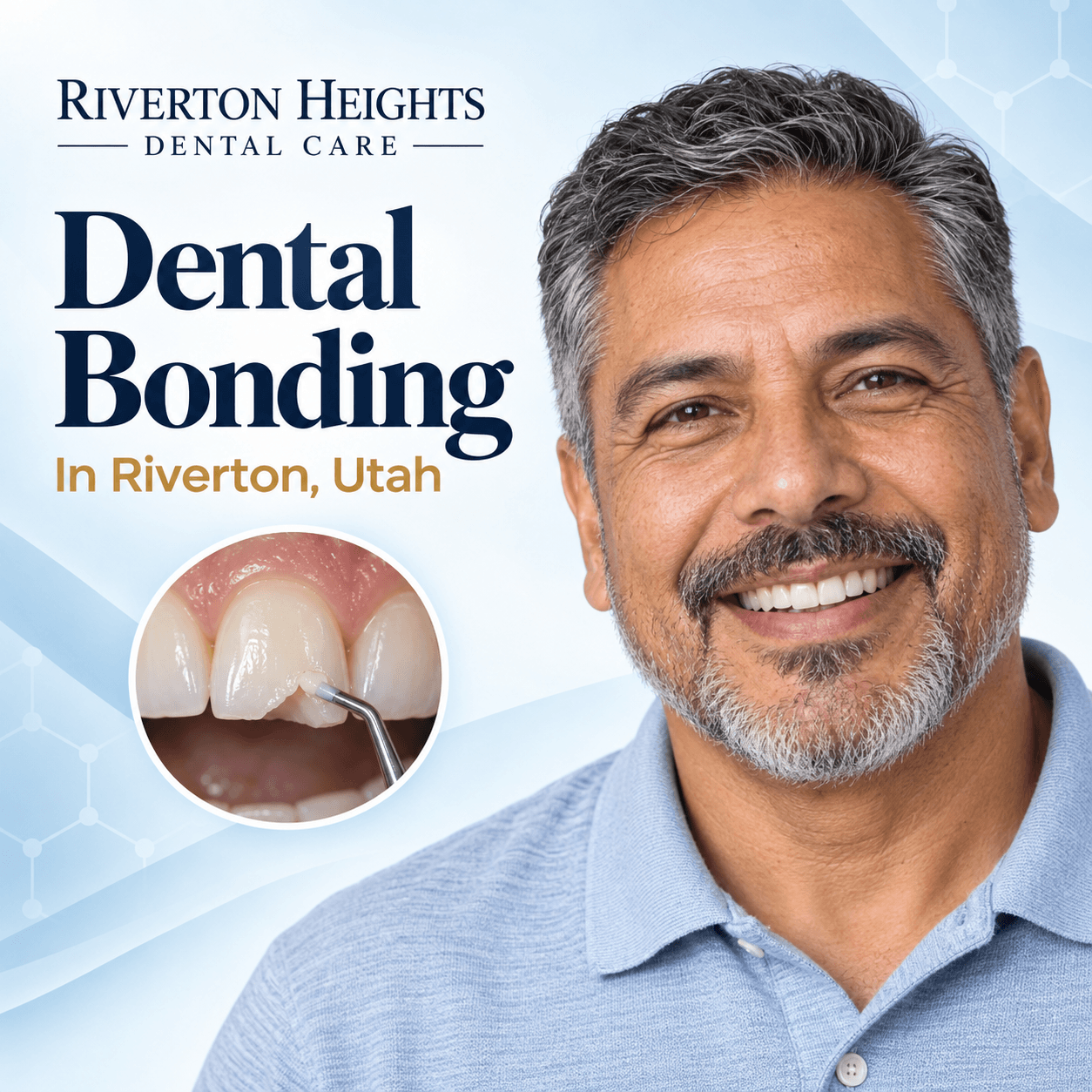

What Can Dental Bonding Fix?
Dental bonding is primarily used for small or moderate cosmetic changes. The composite material can be added directly to a tooth, shaped, hardened, and polished to match the surrounding smile.
Bonding may help improve:
- Small chips in front teeth
- Minor cracks limited to the outer tooth
- Narrow gaps between selected teeth
- Uneven or irregular tooth edges
- Teeth that appear slightly short
- Minor differences in tooth shape
- Localized discoloration that does not respond to whitening
- Small areas of wear
- Exposed areas near the gumline in certain cases
- Older bonding that has chipped, stained, or worn
Bonding cannot correct every dental problem. Deep cracks, extensive decay, major fractures, bite problems, and substantial tooth-position concerns may require a composite dental filling, crown, dental veneer, or orthodontic treatment.
When an uneven edge can be improved by removing a very small amount of enamel instead of adding resin, cosmetic tooth contouring may also be considered.
Who Is a Candidate for Cosmetic Dental Bonding?
Dental bonding in Riverton, Utah may be suitable when the tooth is generally healthy and the requested change can be achieved with a reasonable amount of composite resin.
During your evaluation, your dentist will consider:
- The size and depth of the chip or defect
- The health and strength of the tooth
- The presence of decay or gum disease
- The location of the tooth
- The amount of biting force placed on the area
- Tooth-grinding or clenching habits
- The color of the surrounding teeth
- The amount of material required
Bonding may not be recommended when a tooth has substantial structural damage, a large filling, severe discoloration, heavy bite pressure, or too little healthy tooth structure to support the material. Treating underlying dental problems first helps protect the tooth and improves the likelihood of a successful result.
Dental Bonding For A Chipped Tooth
Repairing a chipped front tooth is one of the most common reasons patients consider dental bonding. Composite resin can be added to the missing area and shaped to restore a smoother, more complete appearance.
Bonding may be appropriate for a small chip when the remaining tooth is healthy and the damage does not extend deeply into the tooth.
A chipped tooth should still be examined even if it does not hurt. The dentist needs to determine:
- How deeply the tooth is damaged
- If a crack extends beyond the visible chip
- If the nerve or inner tooth is affected
- If the bite contributed to the damage
- If bonding can withstand pressure in that location
A deeper fracture may need a dental crown or another restorative treatment.

The Dental Bonding
Procedure
Dental bonding can often be completed in one visit. The number of teeth involved and complexity of the changes will determine the total appointment time.
Examination and Treatment Planning
Your dentist examines the tooth and discusses what you want to change. If bonding is appropriate, a resin shade is selected to complement your natural enamel.
Patients considering professional teeth whitening should discuss it before bonding. Composite resin does not whiten after placement, so whitening may need to be completed first if you want a brighter overall shade.
Preparing the Tooth
The tooth surface is prepared so the bonding material can attach securely. Cosmetic bonding often requires little or no removal of healthy enamel, although the exact preparation depends on the tooth and treatment.
Applying and Shaping the Resin
Tooth-colored composite resin is placed directly on the prepared area. Your dentist shapes the material to rebuild a chip, close a space, adjust an edge, or improve tooth proportion.
Hardening and Polishing
A specialized light hardens the resin. The bonded area is then refined, checked against your bite, and polished to create a smooth, natural-looking finish.
Your Dental Bonding Consultation
Your consultation in Riverton, Utah begins with a conversation about what you would like to improve. Your dentist will examine your smile and determine if dental bonding can provide a natural-looking result based on your specific needs.
The consultation may include:
- Identifying chips, small gaps, worn edges, discoloration, or uneven tooth shapes
- Checking that the tooth and surrounding gums are healthy enough for bonding
- Selecting a composite resin shade that blends naturally with nearby teeth
- Evaluating bite pressure that could cause the bonded material to chip or wear
- Determining where composite resin should be added and how much is needed
- Explaining the conditioning, resin placement, shaping, curing, and polishing process
- Discussing the expected lifespan and possible staining, chipping, or future repairs
- Reviewing aftercare, costs, and treatment alternatives for more extensive concerns
Share the exact changes you hope to see. Your goals help guide the resin shade, placement, contour, and final polished appearance.
Is Dental Bonding Painful?
Cosmetic bonding that does not involve decay or treatment near the nerve often requires minimal preparation. Anesthetic may not be necessary in some cases. Comfort needs vary. Treatment involving a sensitive tooth, decay, a deeper defect, or work near the gumline may require local anesthesia. Your dentist will explain what applies to your procedure.
Most patients can return to their normal activities after the appointment.
Why Choose Riverton Heights Dental Care For Dental Bonding?
Riverton Heights Dental Care provides cosmetic, general, and restorative care in one Riverton dental office. This allows Dr. Cory Fabrizio to evaluate both the appearance and structural health of a chipped, worn, uneven, or discolored tooth.
Our approach includes:
- An individual examination before treatment
- Shade selection based on surrounding teeth
- Conservative treatment planning
- Evaluation of bite and tooth structure
- Clear discussion of limitations and alternatives
- Cosmetic and restorative options in one practice
- Ongoing care for bonded teeth
Request a Dental Bonding Consultation in Riverton, Utah
If you have a small chip, narrow gap, worn edge, or uneven tooth, schedule a dental bonding consultation at Riverton Heights Dental Care. We will examine the area, discuss what you want to change, and determine if composite bonding can provide an appropriate result.
Riverton Heights Dental Care
3693 W. 13400 S., Suite B
Riverton, Utah 84065
Phone
(801) 781-5784
Office Hours:
Monday–Thursday: 8:00 a.m.–5:00 p.m.
Friday–Sunday: Closed
Dental Bonding FAQs
Can Dental Bonding Fix a Chipped Front Tooth?
Bonding can repair many small chips by replacing the missing area with tooth-colored composite resin. The tooth must first be examined to determine the depth of the damage and rule out a deeper crack.
Can Bonding Close a Gap Between My Front Teeth?
Bonding may close a narrow gap by adding resin to the neighboring teeth. Larger spaces or gaps related to tooth position may require orthodontic treatment.
Can Dental Bonding Make a Tooth Look Longer?
Yes, composite resin can sometimes be added to the edge of a short or worn tooth. Candidacy depends on the bite, tooth structure, and amount of material required.
Does Dental Bonding Look Natural?
The resin is selected and shaped to complement the surrounding teeth. Appearance depends on shade selection, tooth position, lighting, existing discoloration, and the amount of material used.
Does Bonding Require Enamel Removal?
Many cosmetic bonding procedures require little or no enamel removal. Some surface preparation is needed to help the material attach to the tooth. The exact process depends on the clinical situation.
Can Bonding Stain?
Composite resin can discolor or lose some surface polish over time. Coffee, tea, tobacco, red wine, and other staining substances may affect its appearance.
Is Bonding Covered by Dental Insurance?
Coverage depends on the reason for treatment and the patient’s policy. Purely cosmetic bonding is commonly excluded. Some plans may provide benefits when treatment repairs qualifying dental damage.
How Much Does Dental Bonding Cost?
Cost varies according to the number of teeth, amount of resin, treatment location, and complexity. An examination is needed before the office can provide a case-specific estimate.