


Plaque and tartar can collect beneath the gumline and contribute to inflammation, periodontal pockets, and damage to the tissues supporting your teeth. These deposits cannot be removed through brushing and flossing alone.
At Riverton Heights Dental Care, Dr. Cory Fabrizio, DMD provides scaling and root planing in Riverton, Utah, as part of our general and family dentistry services. This nonsurgical deep cleaning removes bacterial deposits below the gumline and smooths affected root surfaces for patients diagnosed with periodontal disease.
Treatment recommendations are based on your symptoms, periodontal measurements, dental images, health history, and the extent of the disease.
Schedule a periodontal evaluation for healthier teeth and gums.
What Is Scaling and Root Planing?
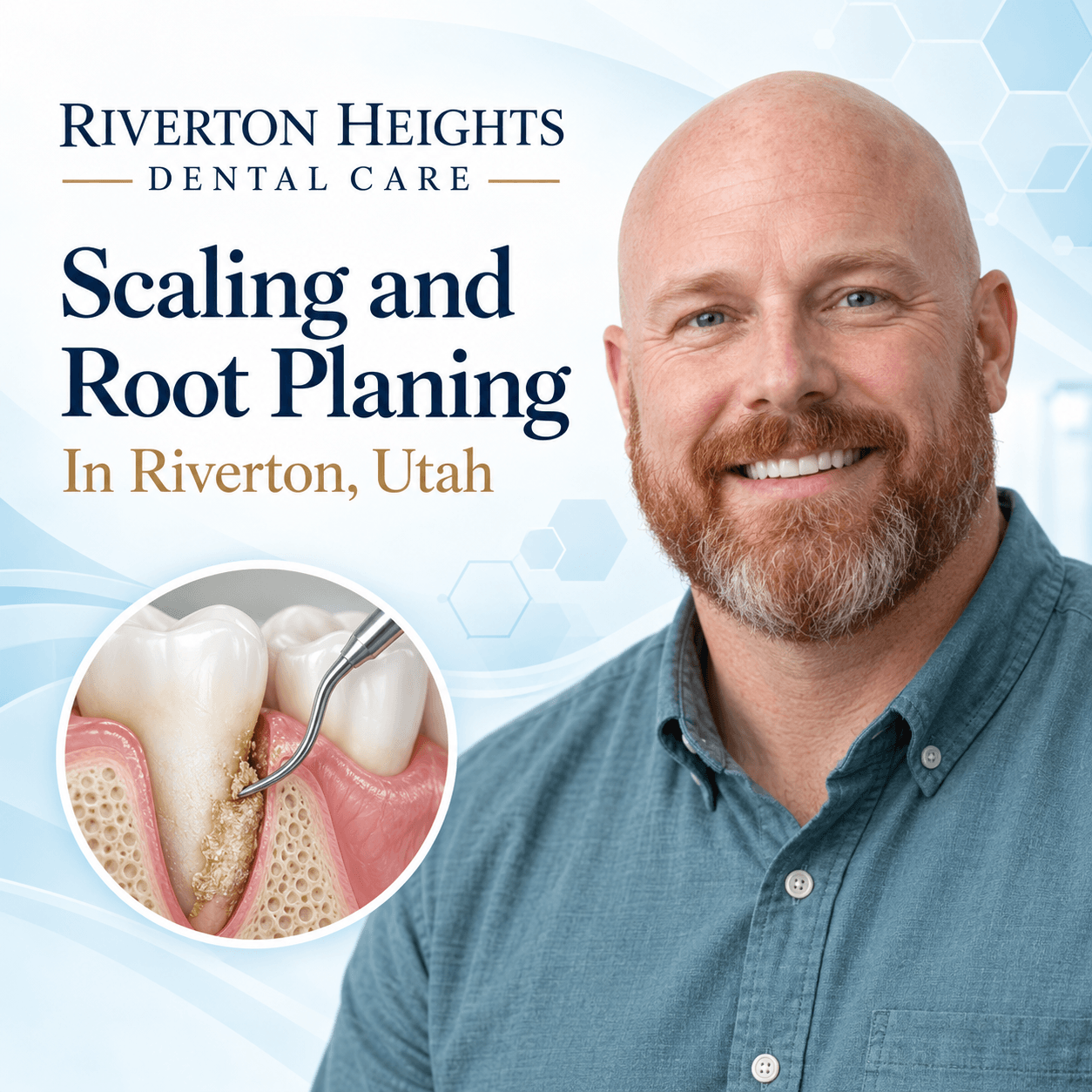
Scaling and root planing is a nonsurgical periodontal treatment that cleans the teeth and root surfaces below the gumline. It is more extensive than the professional cleaning provided during a routine preventive visit.
Scaling removes plaque and hardened tartar from the tooth surfaces and periodontal pockets. Root planing smooths affected root surfaces to remove bacterial deposits and help the gums heal and fit more closely around the teeth.
The American Dental Association explains that scaling and root planing may be needed when the spaces between the teeth and gums become too deep to clean with regular brushing or a routine professional cleaning.
When Is Scaling and Root Planing Recommended?
Scaling and root planing may be recommended when an examination identifies gum disease that cannot be adequately managed with routine preventive care in Riverton, Utah.
- Deep periodontal pockets around selected teeth
- Plaque and tartar beneath the gumline
- Bleeding during brushing, flossing, or probing
- Red, swollen, or tender gums
- Persistent bad breath
- Gum recession or exposed root surfaces
- Early or moderate loss of supporting bone
- Inflammation that remains despite improved home care
- A diagnosis of periodontitis
Scaling and root planing helps control the bacterial infection associated with periodontal disease, but it does not eliminate a patient’s future susceptibility. Daily home care and ongoing periodontal monitoring remain necessary.
Who May Be a Candidate for Deep Cleaning in Riverton, Utah?
A suitable candidate generally has periodontal pockets or below-the-gum deposits that require more extensive treatment than a routine dental cleaning can provide.
Your dentist will consider:
- Periodontal pocket measurements
- Bleeding and inflammation around the gums
- The location and amount of tartar
- Gum recession and exposed root surfaces
- Supporting bone levels shown on dental X-rays
- Tooth mobility and long-term tooth prognosis
- Previous periodontal treatment
- Home-care habits and access between the teeth
- Risk factors such as tobacco use or diabetes
Bleeding or inflamed gums do not automatically mean scaling and root planing is necessary. Gingivitis without deeper periodontal damage may sometimes be managed with a professional cleaning and improved home care.
Advanced periodontal disease may require additional treatment or evaluation by a periodontist. The appropriate recommendation depends on the extent and location of the disease.

What Happens During a Periodontal Evaluation?
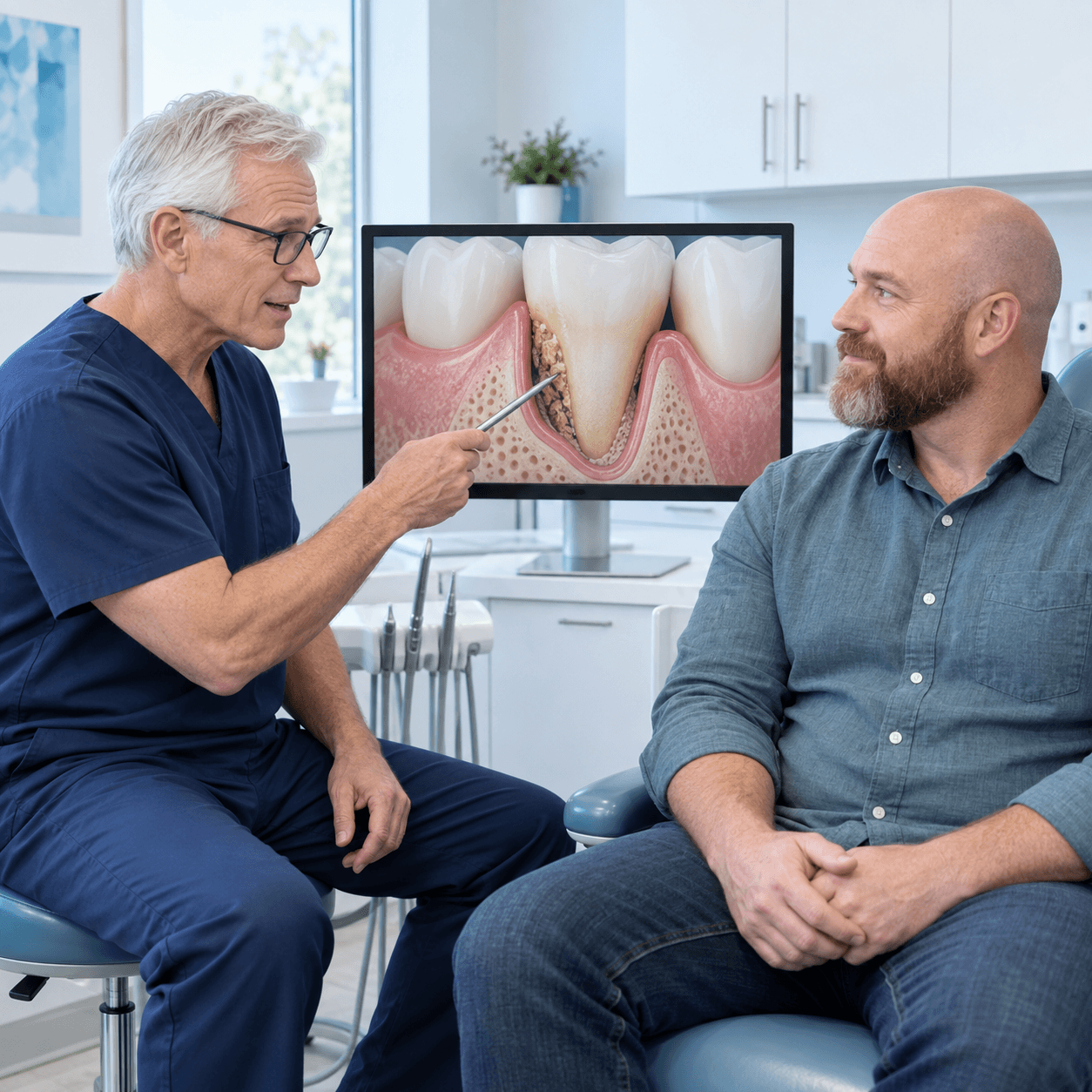
Your evaluation begins with a discussion about your symptoms, health history, medications, previous periodontal treatment, and daily oral-care routine. Tell the dental team about bleeding, bad breath, sensitivity, gum recession, or changes in how your teeth feel.
The dentist or dental hygienist will examine the gums, measure the spaces around the teeth, and review dental X-rays when needed. According to the National Institute of Dental and Craniofacial Research, periodontal diagnosis may include gum examination, pocket measurements, evaluation of the teeth, medical-history review, and dental imaging.
The evaluation may include:
- Reviewing your symptoms and dental history
- Examining the gums for inflammation and recession
- Measuring periodontal pocket depths
- Checking for bleeding around the gums
- Evaluating tooth mobility and bite
- Reviewing X-rays for supporting bone loss
- Discussing your home care and risk factors
This evaluation determines which areas require scaling and root planing and whether another form of periodontal care may be more appropriate.
The Scaling and Root Planing Procedure
Treatment may be completed in one appointment or divided into multiple visits. The schedule depends on the number of areas involved, pocket depth, sensitivity, and extent of the bacterial deposits.
Preparing and Numbing the Treatment Area
The dental team identifies the areas requiring treatment. Local anesthesia may be used when deeper pockets, root sensitivity, or gum tenderness could make treatment uncomfortable. For suitable patients who feel anxious about treatment, nitrous oxide sedation may also be considered. It can support relaxation but does not replace local anesthesia.
Scaling Below the Gumline
Specialized instruments remove plaque and hardened tartar from the tooth surfaces and periodontal pockets. The cleaning extends to the base of each area being treated.
Planing the Roots and Planning Follow-Up
Affected root surfaces are carefully cleaned and smoothed. After the gums have had time to heal, a follow-up evaluation may be scheduled to measure the pockets and determine how the tissues responded.
Medication or an antimicrobial rinse may be recommended in selected cases. These treatments are not necessary for every patient and do not replace thorough cleaning and ongoing home care.
Scaling & Root Planing Compared With a Routine Cleaning
Routine dental cleanings and scaling and root planing both remove bacterial deposits, but they are recommended for different clinical conditions.
Routine Dental Cleaning
- Primarily intended for preventive care
- Cleans accessible surfaces around the gumline
- Appropriate when deep periodontal pockets are absent
- Commonly completed during a regular dental visit
- Helps prevent plaque and tartar accumulation
Scaling and Root Planing
- Used to treat diagnosed periodontal disease
- Cleans tooth roots below the gumline
- Targets deposits inside periodontal pockets
- May require local anesthesia
- Can be divided between multiple appointments
A routine cleaning cannot adequately treat deposits at the base of deep periodontal pockets. Scaling and root planing should be recommended according to periodontal findings rather than used as a substitute for preventive cleaning in every patient.
Other Periodontal Care You May Need
Scaling and root planing may be one part of a broader plan for controlling gum disease and protecting the tissues supporting your teeth.
Improved Home Care
Your dental team may recommend changes to brushing, flossing, or the use of interdental brushes and other cleaning devices.
Medication or Antimicrobial Rinses
Medication may be prescribed or placed in selected periodontal pockets to help control bacteria, discomfort, or infection.
Periodontal Maintenance
After active treatment, periodontal maintenance visits may be recommended more frequently than routine preventive cleanings. These visits help manage deposits and monitor pocket depths.
Periodontal Surgery
Persistent deep pockets or areas that cannot be adequately maintained may require periodontal flap surgery or gingivectomy.
Specialist Evaluation
A periodontist may be recommended when the disease is advanced, the treatment needs are complex, or a tooth’s long-term prognosis requires specialist assessment.
Recovery and Ongoing Care
Temporary soreness, gum tenderness, minor bleeding, and tooth sensitivity may occur after scaling and root planing. The intensity and duration vary according to the treatment area and individual response.
Follow the instructions provided for cleaning, eating, medication, and activity after your appointment.
Aftercare may include:
- Brushing gently with a soft-bristled toothbrush
- Cleaning between the teeth as instructed
- Using a prescribed or recommended rinse
- Taking medication only as directed
- Avoiding tobacco during healing
- Attending the recommended follow-up visit
Contact the dental office if pain, swelling, bleeding, or another symptom becomes severe, persists, or worsens instead of gradually improving.
What Happens After Scaling and Root Planing?
The gums need time to respond before the results of treatment can be fully evaluated.
Your follow-up care may include:
- Rechecking periodontal pocket depths
- Evaluating bleeding and inflammation
- Reviewing your plaque-control routine
- Planning ongoing periodontal maintenance
Some patients respond well enough that surgery is unnecessary. If deep pockets, inaccessible deposits, or inflammation remain, additional periodontal treatment or referral to a periodontist may be recommended.
Scaling and Root Planing Cost
The cost of scaling and root planing depends on the number of areas treated, disease severity, required dental imaging, use of local anesthesia, additional medication, and follow-up needs.
Many dental insurance plans provide benefits for medically necessary periodontal treatment. Deductibles, waiting periods, frequency restrictions, annual maximums, and coverage percentages vary by plan.
Riverton Heights Dental Care can help verify available benefits, although insurance payment cannot be guaranteed. The practice accepts cash, checks, credit cards, and CareCredit. Visit our financial options page for additional information.
Request a Scaling and Root Planing Consultation in Riverton, Utah
If you have bleeding gums, persistent bad breath, gum recession, or a recommendation for deep cleaning, schedule a periodontal evaluation at Riverton Heights Dental Care.
Our dental team can examine your gums and explain if scaling and root planing, routine preventive care, periodontal maintenance, or another treatment may be appropriate.
Riverton Heights Dental Care
3693 W. 13400 S., Suite B
Riverton, Utah 84065
Phone
(801) 781-5784
Office Hours:
Monday–Thursday: 8:00 a.m.–5:00 p.m.
Friday–Sunday: Closed
Scaling and Root Planing FAQs
What is scaling and root planing?
Scaling and root planing is a deep cleaning used to treat periodontal disease. Scaling removes plaque and tartar from above and below the gumline, while root planing cleans and smooths affected root surfaces.
Why would I need scaling and root planing?
The treatment may be recommended when periodontal pockets contain plaque and tartar that cannot be removed through brushing or routine cleaning. It helps control the bacterial infection associated with gum disease.
How is scaling and root planing performed?
Dental instruments are used to clean the teeth and roots to the base of the periodontal pockets. Treatment may be completed in one appointment or divided between multiple visits.
Is scaling and root planing painful?
Local anesthesia may be used to keep deeper or sensitive areas comfortable. Temporary tenderness, bleeding, or tooth sensitivity can occur after treatment.
How long does the procedure take?
Treatment time depends on the number of areas involved, pocket depth, tartar buildup, and patient comfort. Your dental team will explain if the procedure should be completed in one visit or multiple appointments.
What are the benefits of scaling and root planing?
Treatment removes bacterial deposits, helps reduce gum inflammation, and supports healing around the teeth. Results vary according to disease severity, home care, risk factors, and maintenance.
What should I expect after treatment?
Your gums may feel tender, and your teeth may temporarily become more sensitive to temperature. A follow-up visit may be scheduled to assess healing and remeasure the periodontal pockets.
How can I help prevent gum disease from returning?
Brush twice daily with fluoride toothpaste, clean between your teeth every day, avoid tobacco, and attend recommended periodontal maintenance visits. Managing conditions such as diabetes may also support gum health.