


The chewing surfaces of back teeth contain natural pits and grooves where food particles and bacteria can collect. Some grooves are too narrow or deep for toothbrush bristles to clean effectively.
At Riverton Heights Dental Care, Dr. Cory Fabrizio, DMD provides dental sealants in Riverton, Utah, for children, teenagers, and adults whose teeth may benefit from additional protection against cavities.
Sealants are applied without drilling away healthy tooth structure. The procedure can often be completed during a preventive dental visit, and patients can usually return to their normal activities immediately.
Schedule an appointment to find out if dental sealants are appropriate for you or your child.

What Are Dental Sealants?
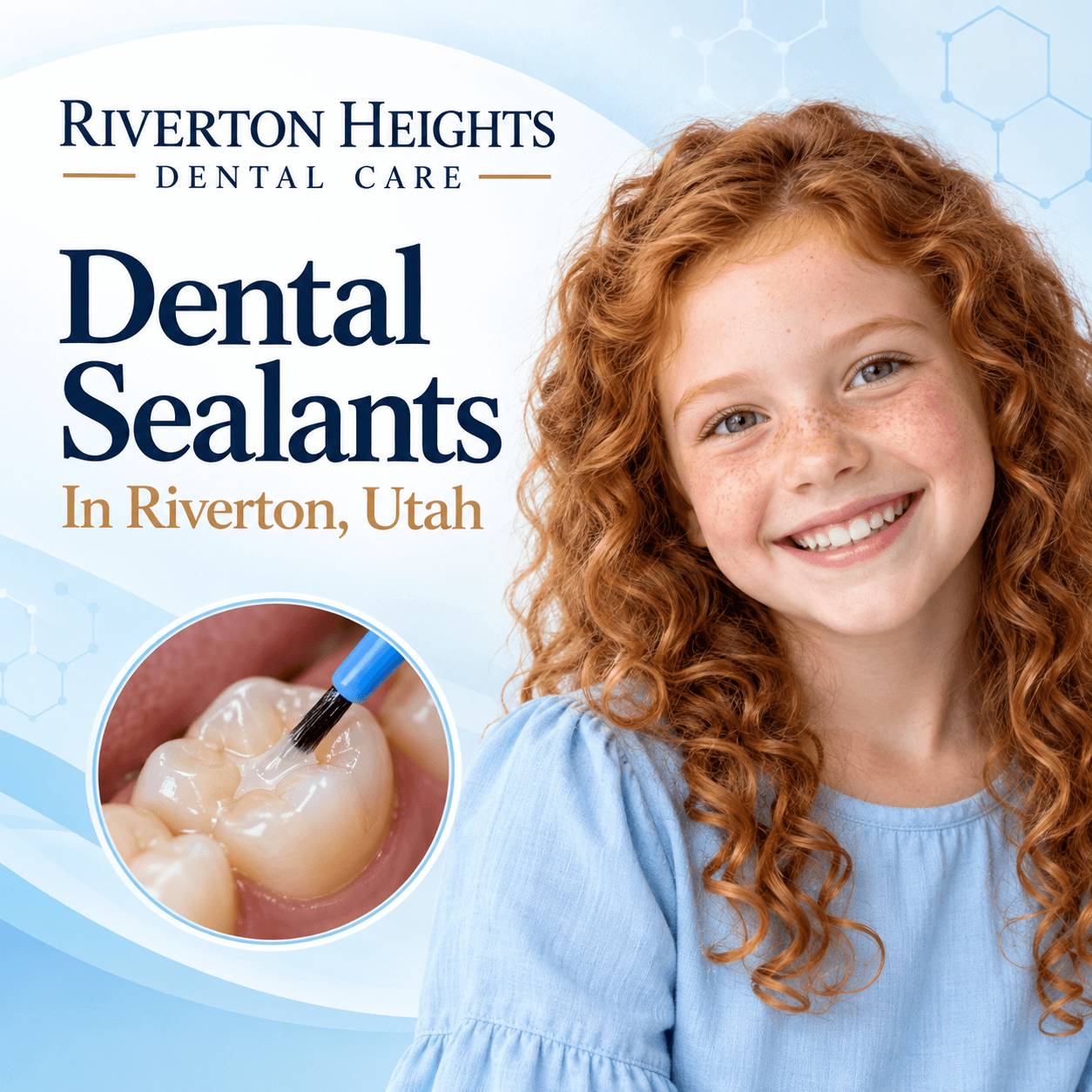
Dental sealants are thin protective coatings placed over the pits and grooves of selected teeth, most commonly permanent molars and premolars.
The liquid sealant flows into the uneven chewing surface and hardens. This creates a smoother barrier that helps prevent food particles and cavity-causing bacteria from accumulating inside vulnerable grooves.
Sealants do not cover the entire tooth or protect areas between teeth and near the gumline. They are one part of preventive care within general and family dentistry and do not replace brushing, flossing, professional cleanings, or regular dental examinations.
How Effective Are Dental Sealants?
Dental sealants can provide meaningful protection for cavity-prone chewing surfaces when they are placed on appropriate teeth and monitored regularly.
Effective protection depends on:
- Selecting teeth that can benefit from sealants
- Thoroughly cleaning the chewing surface
- Keeping the tooth dry during application
- Preparing the enamel correctly
- Proper placement of the sealant material
- Retention of the sealant over time
- Consistent brushing and interdental cleaning
- Diet and frequency of sugar exposure
- Regular monitoring, repair, or reapplication
The CDC reports that sealants can prevent 80% of cavities in treated back teeth during the first two years and continue protecting against 50% of cavities for up to four years. These population-level findings do not guarantee that an individual sealed tooth will remain cavity-free.
Who May Benefit From Dental Sealants?
Age alone does not determine if someone should receive a sealant. A dentist must evaluate the condition, anatomy, and cavity risk of each tooth before recommending treatment.
Your dentist will consider:
- Newly erupted permanent molars
- The depth of the tooth’s pits and grooves
- Difficulty cleaning the back teeth
- Current oral hygiene habits
- Previous cavities or dental treatment
- Diet and frequency of sugar exposure
- Fluoride exposure
- Early noncavitated changes in selected grooves
- Overall risk of developing future decay
Not every molar automatically needs a sealant. Teeth with shallow, easy-to-clean grooves or a low risk of decay may not receive the same recommendation.
A tooth with an established cavity, significant structural damage, a large restoration, or another condition requiring repair may need restorative treatment instead of a routine preventive sealant.

What Happens During a Dental Sealant Evaluation?
The evaluation begins with a review of the patient’s dental history, home-care habits, previous cavities, and other factors that may affect cavity risk.
The dentist or dental team will examine the chewing surfaces of the back teeth. This helps determine which teeth may benefit from sealants and whether decay, cracks, fillings, or other conditions require a different form of care.
Before recommending sealants, your dentist may evaluate:
- The depth and shape of the tooth’s grooves
- Whether the tooth has fully erupted
- Existing decay or early enamel changes
- Current fillings, crowns, or restorations
- The condition of the enamel
- The patient’s cavity history
- Whether the tooth can remain dry during placement
This evaluation in Riverton, Utah helps ensure that sealants are placed on teeth that can benefit from preventive protection rather than teeth that already require restorative care.
The Dental Sealant Procedure
Dental sealant placement is generally quick and does not require drilling when the material is applied to an appropriate tooth.
Examining and Cleaning the Tooth
The dental team examines the tooth for decay, cracks, and existing restorations. The chewing surface is then cleaned to remove plaque and debris from the pits and grooves.
Isolating and Preparing the Surface
The tooth is isolated and dried because moisture can interfere with bonding. A conditioning material is placed briefly on the enamel before the surface is rinsed and dried according to the sealant system being used.
Applying and Checking the Sealant
The liquid sealant is placed into the grooves and hardened, commonly with a curing light. The dental professional checks the completed sealant and evaluates how the upper and lower teeth meet.
Healthy tooth structure is not drilled away during routine sealant placement, so local anesthesia is typically unnecessary. Some children may need additional support keeping their mouth open or the tooth dry during the procedure.
Dental Sealants Compared With Fillings
Sealants and fillings can both involve tooth-colored dental materials, but they serve different purposes.
Dental Sealants
- Primarily used to help prevent cavities
- Cover vulnerable pits and grooves
- Usually require no drilling
- Preserve the existing healthy tooth structure
- May wear and require repair or reapplication
Dental Fillings
- Used to restore decay or structural damage
- Replace tooth structure that has been lost
- Commonly require removal of damaged material
- Repair an area after a cavity is diagnosed
A sealant cannot restore a large cavity or significantly damaged tooth. If tooth structure has already been lost, a composite dental filling or another restorative treatment may be more appropriate.
Other Ways to Help Prevent Cavities
Sealants protect only the surfaces they cover. A complete preventive plan may include several additional forms of care.
Fluoride Toothpaste
Brushing twice daily with fluoride toothpaste helps remove plaque and strengthen exposed tooth surfaces against acid-related mineral loss.
Cleaning Between Teeth
Floss or another interdental cleaner removes plaque and food particles from areas a sealant cannot protect, including the spaces between teeth.
Professional Dental Cleanings
Routine cleanings remove hardened deposits and allow the dental team to evaluate areas that may be difficult to maintain at home.
Fluoride Treatment
Professional fluoride may be recommended based on age, cavity history, enamel condition, diet, and overall risk of developing decay.
Dietary Habits
Limiting frequent sugary snacks and drinks reduces repeated acid exposure that can contribute to cavities on sealed and unsealed surfaces.
Aftercare and Sealants for Different Ages
Patients can generally return to normal activities and eat or drink after the sealant material has hardened. A newly sealed tooth may feel slightly different at first, but the bite should not remain uncomfortable.
Sealants can protect teeth for several years, although they may gradually wear, chip, or partially separate from the enamel.
To care for sealed teeth:
- Brush twice daily with fluoride toothpaste
- Floss or clean between teeth every day
- Attend recommended dental examinations
- Receive regular professional cleanings
- Limit frequent sugary snacks and drinks
- Have the sealants checked during routine visits
Contact the office if the bite continues to feel uneven or the tooth becomes painful or sensitive. A worn or missing sealant can often be repaired or replaced after the tooth is examined.
Can Children and Adults Get Dental Sealants?
Yes. Sealants may be appropriate at different stages of life when selected teeth have cavity-prone grooves and can be properly sealed.
Sealants may be considered for:
- Newly erupted permanent molars in children
- Selected primary molars with deep grooves
- Cavity-prone back teeth in teenagers
- Healthy, unrestored molars in adults
The decision is based on tooth anatomy, existing dental work, cavity history, enamel condition, bite forces, and overall cavity risk rather than age alone.
Dental Sealants Cost
The cost of dental sealants depends on the number of teeth treated, the material used, the patient’s age, the condition of each tooth, and any additional preventive or diagnostic services provided.
Many dental insurance plans include benefits for sealants on children’s permanent teeth. Age limits, eligible teeth, frequency restrictions, coverage percentages, and patient costs vary by plan. Adult sealants may not receive the same coverage.
Riverton Heights Dental Care can help verify available benefits, although verification does not guarantee insurance payment. The practice accepts cash, checks, credit cards, and CareCredit. Visit our financial options page for additional information.
Request a Dental Sealant Consultation
in Riverton, Utah
Ask Riverton Heights Dental Care if sealants could help protect your child’s newly erupted molars or another cavity-prone tooth.
Our dental team will examine the teeth and explain which surfaces may benefit from sealants, which teeth may not need them, and whether another treatment is required.
Riverton Heights Dental Care
3693 W. 13400 S., Suite B
Riverton, Utah 84065
Phone
(801) 781-5784
Office Hours:
Monday–Thursday: 8:00 a.m.–5:00 p.m.
Friday–Sunday: Closed
Dental Sealants FAQs
What age should children get dental sealants?
Sealants are commonly considered when permanent molars emerge, often around age six for the first molars and age twelve for the second molars. Eruption timing and cavity risk vary, so each tooth should be evaluated individually.
Are dental sealants only for children?
No. Teenagers and adults may also benefit when selected back teeth have deep, cavity-prone grooves and can be properly sealed. A dentist must evaluate each tooth to determine if a sealant is appropriate.
Can baby teeth receive dental sealants?
Yes. A dentist may recommend sealing a primary molar when it has deep grooves, is difficult to clean, and is expected to remain in place for several years. The recommendation depends on the tooth’s condition and the child’s risk of decay.
Do dental sealants require drilling or numbing?
Routine sealant placement on an appropriate tooth generally does not require drilling or local anesthesia. The tooth is cleaned, prepared, dried, and coated with the sealant material.
Can a tooth develop a cavity under a sealant?
A properly retained sealant helps isolate the covered surface. Decay can still develop around a worn or missing sealant, between teeth, or on another surface, making regular dental examinations important.
Can sealants be placed over early tooth decay?
Selected early, noncavitated areas may sometimes be sealed following a clinical evaluation. A cavity with missing tooth structure generally requires a filling or another restorative treatment.
How long do dental sealants last?
Sealants can provide protection for several years, but they are not permanent. Their condition should be checked during routine visits, and worn or missing areas may need repair or reapplication.
Does dental insurance cover sealants?
Many plans provide sealant benefits for children’s permanent molars, but age limits, eligible teeth, frequency restrictions, and coverage percentages vary. Our team can help verify benefits before treatment, although coverage verification does not guarantee payment.