


Advanced gum disease can create deep spaces between the teeth and gums where plaque, tartar, and bacteria are difficult to remove. If these areas remain after nonsurgical periodontal care, gum surgery may be considered.
Riverton Heights Dental Care provides periodontal flap surgery and gingivectomy in Riverton, Utah, as part of our general and family dentistry services for clinically appropriate patients. Dr. Cory Fabrizio DMD evaluates your gums, periodontal measurements, dental images, previous treatment, and overall health before recommending a procedure.
Flap surgery and gingivectomy are different treatments with different purposes. A referral to a periodontist may be recommended when specialist care is more appropriate for your condition.
Schedule a periodontal evaluation in Riverton, Utah.
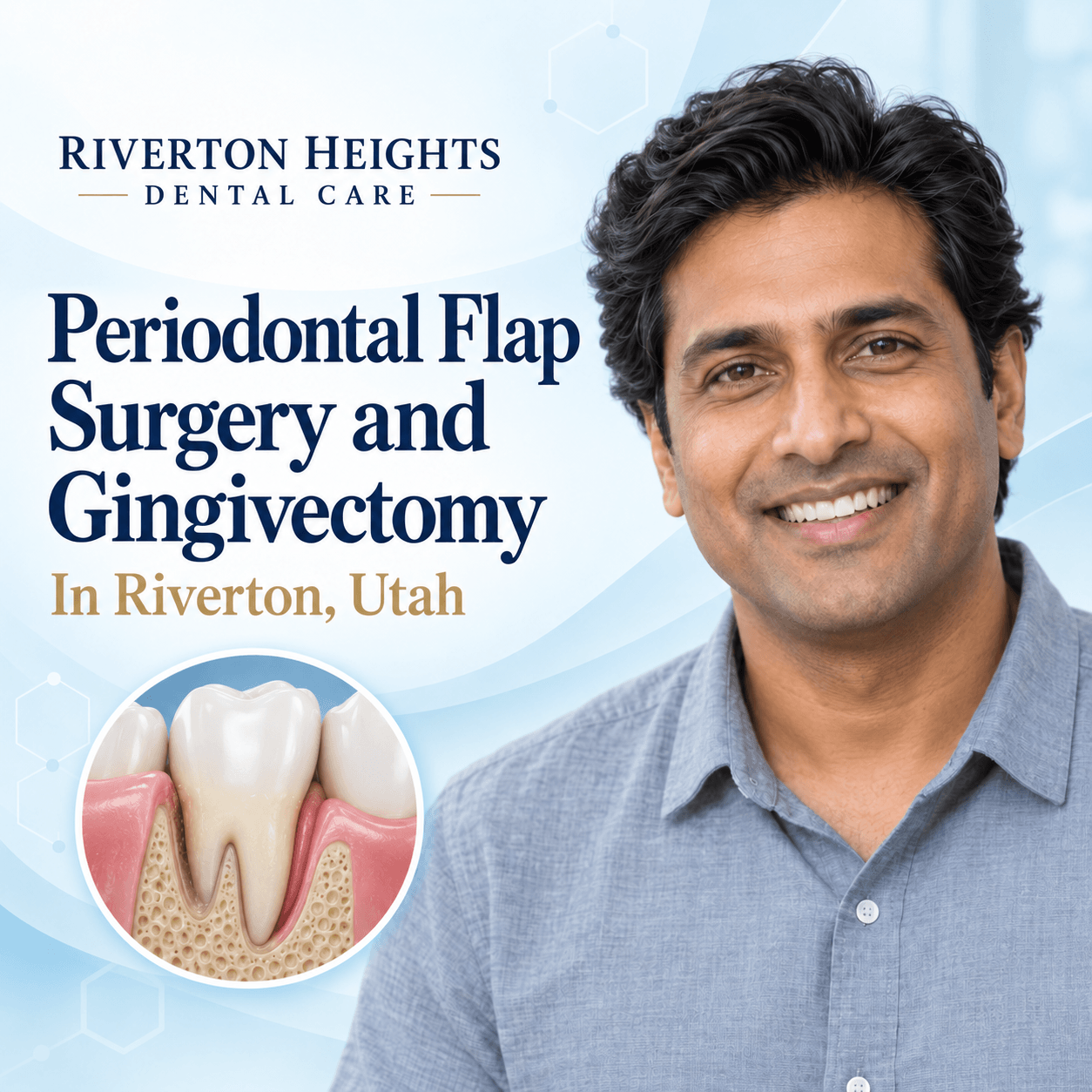
What Is Periodontal Gum Surgery?
Periodontal surgery may be recommended to improve access to diseased areas, reduce selected periodontal pockets, or remove gum tissue that interferes with cleaning and treatment.
Flap surgery involves carefully separating the gums from the teeth so the dentist can access deeper root surfaces. After plaque, tartar, bacteria, and affected tissue are removed, the gums are repositioned and commonly secured with sutures.
A gingivectomy removes selected gum tissue rather than temporarily lifting and repositioning it. It may be used when excess or diseased tissue contributes to periodontal pockets, traps plaque, or makes daily cleaning difficult.
When May Gum Surgery Be Recommended?
Periodontal surgery is generally considered when less invasive care cannot adequately manage the affected areas.
- Deep periodontal pockets remain after nonsurgical treatment
- Plaque or tartar cannot be adequately accessed
- Periodontitis has affected supporting tissues
- Diseased gum tissue requires removal
- Excess tissue makes daily cleaning difficult
- Inflammation persists in selected areas
- Gum contours interfere with effective maintenance
- A dental procedure requires greater access to tooth structure
- Monitoring alone cannot predictably manage the condition
Gum surgery is not automatically required when signs of periodontal disease are present. An examination, periodontal measurements, and dental images are needed to determine the appropriate treatment.
Who May Be a Candidate for Periodontal Surgery?
A suitable candidate generally has a condition that can benefit from surgical access or tissue removal and is healthy enough to undergo the recommended procedure.
Your dentist will consider:
- Periodontal pocket measurements
- The response to scaling and root planing
- Supporting bone levels shown on dental X-rays
- The location of plaque and tartar deposits
- Gum inflammation, recession, and tissue condition
- Tooth mobility and long-term tooth prognosis
- Your ability to clean the affected area
- Relevant health conditions, medications, and tobacco use
- Your ability to follow postoperative instructions
Tobacco use, diabetes, certain medications, genetics, and other health factors can influence gum disease and healing. Provide a complete health history before treatment.
Some patients respond well enough to nonsurgical care that surgery is unnecessary. Patients with advanced or complex periodontal needs may be referred to a periodontist.

What Happens During a Periodontal Evaluation?
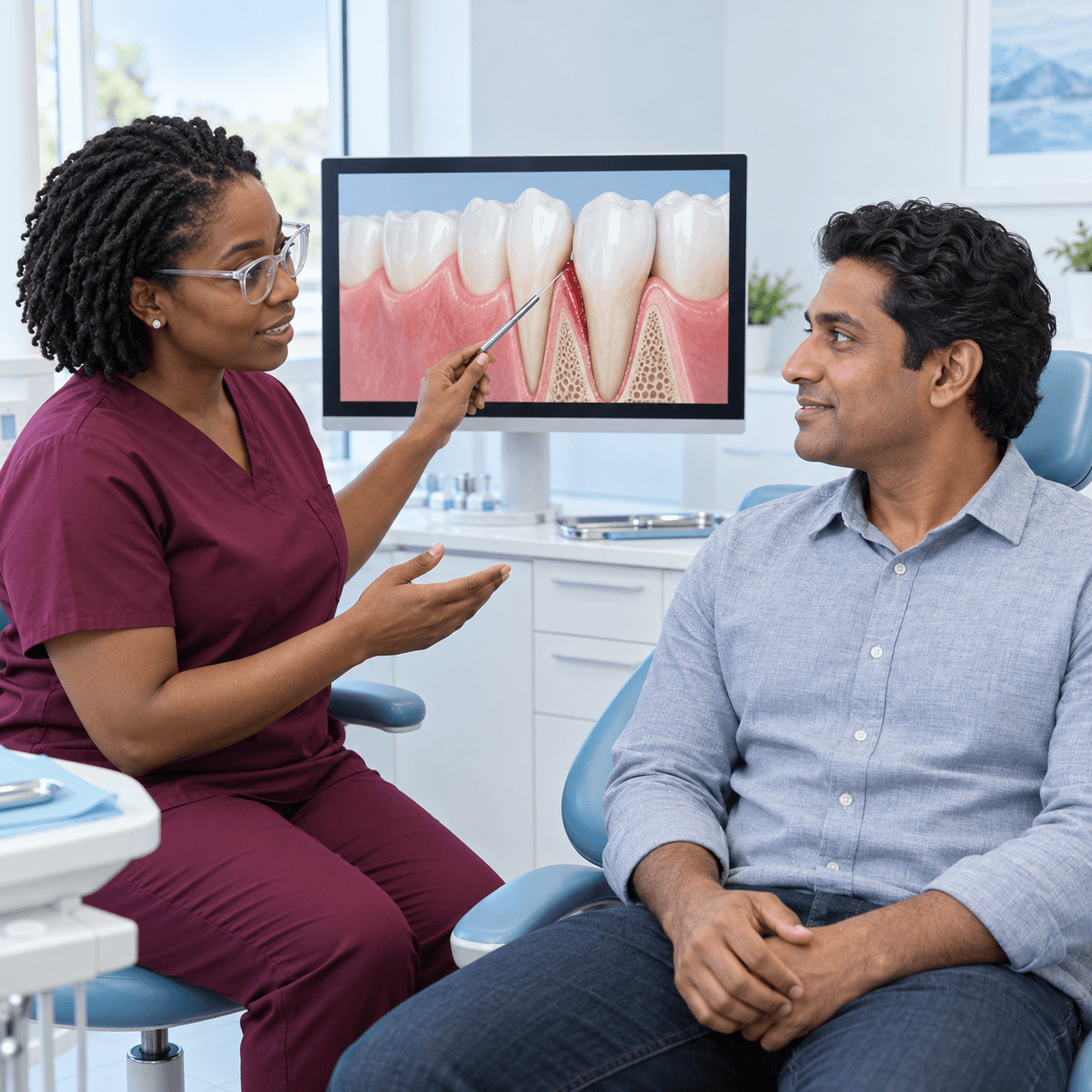
Your evaluation begins with a conversation about your symptoms, dental history, previous periodontal treatment, and concerns. Tell the dental team about bleeding, swelling, discomfort, tooth movement, or changes in your bite.
The dentist will examine your gums and supporting structures to determine the extent of the condition. Dental X-rays may be reviewed to evaluate the bone surrounding the affected teeth.
During the evaluation, your dentist may:
- Review your symptoms and dental history
- Discuss previous periodontal treatment
- Review medical conditions and medications
- Examine the gums for inflammation and recession
- Measure periodontal pocket depths
- Evaluate tooth mobility and bite relationships
- Review dental X-rays for supporting bone levels
The evaluation helps determine if nonsurgical treatment, flap surgery, gingivectomy, another periodontal procedure, or specialist care is appropriate.
The Periodontal Surgery Procedure
The exact procedure depends on the diagnosis, teeth involved, periodontal pocket depth, supporting bone, and overall treatment plan.
Numbing and Preparing the Area
Local anesthesia is used to numb the gum tissue and surrounding area. You may notice pressure, vibration, or movement, but the treated area should not feel sharp pain after the local anesthetic takes effect.
Performing Flap Surgery or Gingivectomy
During flap surgery, small incisions allow the gum tissue to be gently lifted so deeper root surfaces can be cleaned. During a gingivectomy, the dentist removes and reshapes selected gum tissue based on the treatment objective.
Finishing the Procedure and Planning Follow-Up
Flap surgery commonly involves repositioning the gum tissue and securing it with sutures. A gingivectomy may or may not require sutures. A periodontal dressing may be used in selected cases, and follow-up care allows the dentist to monitor healing.
Nitrous oxide may be available for suitable patients who experience dental anxiety, but it does not replace local anesthesia. Learn more about nitrous oxide sedation.
Flap Surgery Compared With Gingivectomy
Flap surgery and gingivectomy are different periodontal procedures. The appropriate choice depends on the diagnosis and treatment objective.
Flap Surgery
- Temporarily lifts or separates gum tissue
- Provides access to deeper root surfaces
- May be used for deep periodontal pockets
- Gum tissue is repositioned after treatment
- Sutures are commonly used
Gingivectomy
- Removes selected gum tissue
- Reduces excess or diseased tissue
- Can improve access for daily cleaning
- Primarily focuses on gum tissue
- Sutures may or may not be required
Selected flap-surgery cases may involve treatment of irregular supporting bone, but bone treatment is not included in every procedure. Gingivectomy primarily focuses on removing and reshaping gum tissue.
Alternatives to Periodontal Surgery
The available alternatives depend on the severity of gum disease, previous treatment, tooth prognosis, and your ability to maintain the affected areas.
Scaling and Root Planing
Scaling and root planing removes plaque and tartar from beneath the gumline and cleans affected root surfaces. The gums are reevaluated after healing to determine how they responded.
Periodontal Maintenance
Ongoing periodontal maintenance helps control bacterial buildup and monitor pocket depths after active gum-disease treatment.
Improved Home Care
Specialized brushing techniques, interdental brushes, floss, or other recommended devices may make difficult areas easier to clean.
Medication and Risk-Factor Management
Local or systemic medication may be considered in selected cases. Managing diabetes, avoiding tobacco, and addressing other health factors can also support periodontal care.
Specialist Care or Tooth Extraction
Referral to a periodontist may be recommended when advanced or complex treatment is needed. Tooth extraction may be considered when a tooth cannot be retained predictably because its periodontal support has been severely compromised.
Recovery and Postoperative Care
Initial healing commonly occurs during the first one to two weeks, although deeper healing and tissue stabilization can take longer. Recovery depends on the procedure, treatment area, overall health, and individual healing response.
Soreness, swelling, minor bleeding, gum tenderness, and temporary tooth sensitivity may occur after treatment.
Postoperative care may include:
- Taking medication as directed
- Avoiding vigorous rinsing during the initial healing period
- Eating softer foods as recommended
- Keeping fingers and the tongue away from the surgical site
- Cleaning around the area according to your instructions
- Attending scheduled follow-up appointments
Avoid tobacco and strenuous activity for the period recommended by your dentist. Follow the instructions provided for brushing, rinsing, food choices, sutures, and periodontal dressings.
When Should You Contact the Dental Office?
Contact Riverton Heights Dental Care if you experience symptoms that do not follow the expected healing pattern.
Contact our office for:
- Bleeding that does not slow with the recommended measures
- Increasing swelling, fever, or drainage
- Severe or worsening pain
- Loose sutures, medication reactions, or persistent numbness
Seek urgent medical assistance for difficulty breathing or swallowing, severe facial swelling, uncontrolled bleeding, or signs of a serious allergic reaction.
Flap Surgery and Gingivectomy Cost
The cost of periodontal surgery depends on the procedure performed, the number of teeth or areas treated, disease severity, diagnostic imaging, anesthesia or sedation, additional periodontal procedures, and follow-up needs.
Many dental insurance plans provide some benefits for medically necessary periodontal treatment. Deductibles, waiting periods, annual maximums, eligible procedures, and coverage percentages vary by plan.
Riverton Heights Dental Care accepts cash, checks, credit cards, and CareCredit. Visit our financial options page for additional information.
Request a Gum Surgery Evaluation in Riverton, Utah
If you have persistent periodontal pockets, advanced gum disease, excess gum tissue, or a recommendation for periodontal surgery, schedule an evaluation at Riverton Heights Dental Care.
Our dental team can review your periodontal condition and explain if flap surgery, gingivectomy, nonsurgical treatment, or referral to a periodontist may be appropriate.
Riverton Heights Dental Care
3693 W. 13400 S., Suite B
Riverton, Utah 84065
Phone
(801) 781-5784
Office Hours:
Monday–Thursday: 8:00 a.m.–5:00 p.m.
Friday–Sunday: Closed
Gum Surgery FAQs
Are flap surgery and gingivectomy the same?
No. Flap surgery temporarily lifts gum tissue to provide access to deeper areas and then repositions it. Gingivectomy removes selected gum tissue.
Why might I need periodontal flap surgery?
Flap surgery may be considered when deep periodontal pockets, tartar deposits, or diseased areas remain inaccessible after nonsurgical care. It allows the dentist to reach and clean deeper root surfaces.
Is scaling and root planing required before surgery?
Many patients receive scaling and root planing before periodontal surgery is considered. The treatment sequence depends on disease severity, previous care, and how the gums respond to nonsurgical treatment.
Is gum surgery painful?
Local anesthesia is used to control discomfort during the procedure. Pressure or movement may still be noticeable, and temporary soreness, swelling, tenderness, or sensitivity can occur afterward.
Are you put to sleep for gum surgery?
The procedures described on this page use local anesthesia. Nitrous oxide may be available for suitable patients with dental anxiety, but it does not replace local anesthesia.
How long does gum surgery recovery take?
Initial healing often occurs during the first one to two weeks, but deeper tissue healing may continue longer. Your dentist will provide guidance based on the procedure and treatment area.
Will my gums recede after periodontal surgery?
Some gum recession or increased tooth exposure can occur as diseased tissue is treated and swelling resolves. Your dentist will discuss likely changes in appearance and sensitivity before treatment.
Can gum disease return after surgery?
Yes. Surgery cannot guarantee that periodontal disease will not return or progress. Daily home care, periodontal maintenance, risk-factor management, and regular monitoring remain essential.