


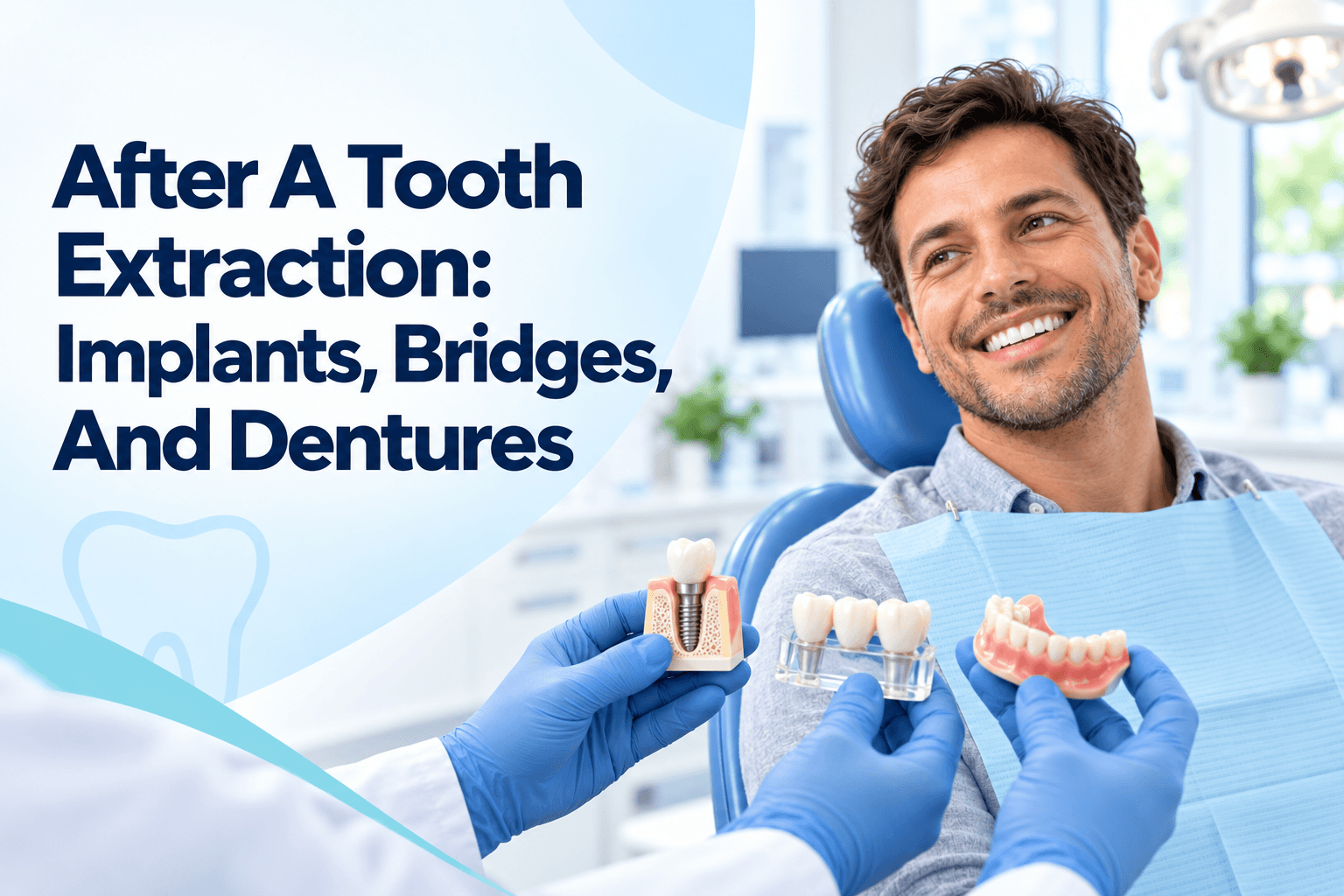
Losing a tooth can leave you with two immediate questions: How will the area heal, and what will replace the tooth? Dental implants, bridges, and dentures can all restore missing teeth. The right choice depends on how many teeth are missing, the condition of nearby teeth and bone, your health, and the treatment schedule that works for you.
If an extraction is planned, bring up replacement during that visit. Decisions about the extraction site and a temporary tooth may be easier to make before the tooth comes out.
Do You Need To Replace Every Extracted Tooth?
An extraction leaves a space that may affect chewing, speech, or your smile. Nearby teeth can shift, and the bone around a missing tooth can change over time. Implants, bridges, and dentures provide different ways to address those concerns.
Your dentist will assess the tooth’s location, your bite, and the health of neighboring teeth before recommending treatment. A missing wisdom tooth, for example, raises different concerns from a missing front tooth or a molar used for chewing. Ask about your specific space before assuming you need a replacement.
If your tooth has not yet been removed, a consultation for tooth extraction can include a discussion of healing and possible replacement plans.
How Do Implants, Bridges, And Dentures Work?
Dental Implants
An implant is a post placed in the jawbone to support a crown, bridge, or denture. For one missing tooth, the visible replacement is usually an implant-supported crown. A single implant does not rely on the neighboring teeth for support.
Treatment includes an examination, implant placement, healing, and attachment of the restoration. Bone sometimes needs several months to heal around the implant; some patients need additional preparation or a different sequence. Gum health, bone support, medical history, and healing risks all matter. Learn what the practice evaluates for dental implants.
Dental Bridges
A traditional fixed bridge fills a gap with an artificial tooth supported by crowns on neighboring teeth. Your dentist prepares those supporting teeth, takes records for the restoration, and fits the finished bridge. An implant-supported bridge is another design used in some cases.
A bridge may suit someone with healthy supporting teeth who prefers a fixed replacement without implant surgery. The condition of those teeth is central to the decision because they carry the restoration. Food can collect beneath a bridge, so daily cleaning around and under it matters. See the practice’s dental crowns and bridges service for details.
Partial And Full Dentures
A removable partial denture replaces several teeth while fitting around teeth that remain. A full denture replaces an entire upper or lower arch. Some dentures can receive support from implants.
Dentures can address several gaps with one appliance. Expect measurements, fitting, and possible adjustments as you get used to speaking and eating with it. After extractions, the gums and jaw can change shape during healing. An immediate denture placed on extraction day may later need a reline or replacement. Read about the practice’s dentures for multiple missing teeth.
Which Replacement Fits Your Situation?
| Question | Implant | Traditional Bridge | Removable Denture |
|---|---|---|---|
| What supports it? | Jawbone | Nearby teeth | Gums and, for many partials, remaining teeth |
| Does it involve surgery? | Yes | Usually no implant surgery | Usually no implant surgery |
| Is it removable at home? | The finished crown stays in place | No | Usually yes |
| What needs special attention? | Gums and implant restoration | Supporting teeth and space beneath the bridge | Appliance fit, cleaning, and remaining teeth |
For one missing tooth with healthy neighboring teeth, an implant may preserve those teeth from preparation. A bridge might make sense when nearby teeth already need crowns. For several missing teeth in different positions, a partial denture may address more than one space. Your examination will show which examples apply to you.
When Can You Replace A Tooth After Extraction?
Timing depends on the condition of the extraction site, infection, gum and bone health, and the replacement chosen. Your dentist may discuss an immediate temporary tooth, a bridge after the area is ready, an immediate denture, or an implant placed at an appropriate stage. An implant and its final crown may require separate visits with healing between them.
Ask about the plan before extraction if you hope to receive an implant. Your dentist can explain if imaging, a bone graft, or another preparatory step is relevant to your case. Tell the office if the missing tooth affects your ability to speak at work or eat comfortably; those concerns can shape the temporary plan.
What Affects Cost And Long-Term Care?
Costs vary with the number of teeth being replaced and the steps required. An implant estimate may include imaging, surgery, an abutment, a crown, and any preparatory treatment. A bridge estimate should account for its supporting teeth. Denture fees may reflect the design and later adjustments. Ask for a written treatment plan and check your insurance benefits before comparing totals.
Every choice needs ongoing care. Clean around implant restorations and bridges as instructed, and continue regular dental visits. Remove and clean a removable denture according to your dentist’s directions. If it becomes loose or causes sore spots, schedule an adjustment. Avoid reshaping it yourself.
Frequently Asked Questions
Can I Get A Temporary Tooth While The Area Heals?
Sometimes. A temporary bridge or denture may be possible during healing, especially when the missing tooth is visible. The suitable design depends on the extraction site and your treatment plan. Ask before the procedure so your dentist can explain the sequence.
Can A Denture Be Supported By Implants Later?
It may be possible. The number and position of implants, available bone, and current denture design determine what changes are needed. Your dentist may recommend a new appliance after evaluating the existing one.
Can I Leave The Space Empty For A While?
That depends on the tooth and your bite. Ask your dentist how waiting could affect nearby teeth, the available bone, and the replacement you may want later. If you need time to make a decision, request a plan for monitoring the space.
Plan Your Next Step In Riverton, Utah
Replacing a tooth is a decision about your whole bite, your daily routine, and the care you can maintain. At Riverton Heights Dental Care in Riverton, Utah, an examination can clarify which approaches are suitable and what each would involve. If an extraction is coming up, ask to discuss replacement and temporary needs at the same appointment so you leave with a clear plan.


