

Tooth pain, swelling, or a visible crack can make extraction feel inevitable. Many damaged teeth can still be treated and preserved after a careful examination. The decision depends on structure, infection, support, position, and expected function.
Extraction may be necessary when a tooth cannot be repaired predictably. Recognizing warning signs can help you seek care before pain intensifies or infection spreads.
Signs A Tooth Needs Prompt Dental Attention
Symptoms cannot confirm that a tooth needs removal. They indicate that the tooth and surrounding tissues should be examined. Contact a dentist when you notice:
- Persistent or throbbing tooth pain
- Pain when biting or releasing your bite
- Swelling in the gums, face, or jaw
- A broken tooth near or below the gumline
- Pus, drainage, or a recurring gum bump
- A bad taste or odor near one tooth
- Increasing tooth mobility
- Fever associated with dental pain or swelling
- Difficulty opening your mouth, swallowing, or breathing
Difficulty breathing or swallowing, rapidly increasing facial swelling, or swelling near the eye requires urgent medical attention. These symptoms may signal that an infection has spread beyond the tooth.
When May A Tooth Need To Be Extracted?
A dentist generally considers removal after assessing the tooth’s ability to support a functional restoration. Tooth extractions may be recommended for several clinical reasons.
Severe Tooth Decay
Decay can destroy enamel and dentin until too little healthy structure remains to hold a filling or crown. Decay extending far below the gumline may also make the tooth difficult to isolate, repair, and maintain.
Deep Cracks Or Root Fractures
A crack limited to part of the crown may be treatable. A vertical crack extending through the root can allow bacteria to enter areas that cannot be sealed predictably. Fracture location and direction strongly influence the recommendation.
Advanced Gum Disease
Periodontal disease can damage the gum attachment and bone supporting a tooth. Significant bone loss may cause the tooth to move and become unable to handle normal chewing forces.
Impacted Or Poorly Positioned Teeth
An impacted tooth may remain trapped beneath the gum or bone. Removal may be considered when it causes infection, decay, damage to a neighboring tooth, cyst formation, or persistent discomfort.
Can The Tooth Be Saved?
The presence of pain or infection does not automatically require extraction. If the tooth has sufficient structure, healthy support, and a restorable crack pattern, treatment may allow it to remain in the mouth.
| Dental Finding | Treatment That May Be Considered |
|---|---|
| Small Or Moderate Decay | A filling may repair the damaged area. |
| Inflamed Or Infected Pulp | Root canal treatment may preserve the tooth. |
| Large Filling Or Weakened Structure | A crown may cover and protect the tooth. |
| Limited Cusp Fracture | A filling, onlay, or crown may restore function. |
| Vertical Root Fracture | Extraction may be recommended. |
| Severe Bone Loss And Mobility | Periodontal care or extraction may be discussed. |
Root canal therapy removes inflamed or infected tissue from inside a restorable tooth. The canals are cleaned and sealed, and the tooth receives a filling or crown for protection. This treatment preserves the natural root and maintains the tooth’s position in the bite.
How Does A Dentist Make The Decision?
Your dentist combines symptoms with examination findings and dental images. One isolated detail rarely determines the full treatment plan.
The evaluation may include:
- Measuring the amount of healthy tooth above the gumline
- Checking the tooth for cracks, mobility, and bite pain
- Testing sensitivity or nerve response
- Reviewing X-rays for decay, infection, and bone loss
- Examining the gums and periodontal support
- Assessing neighboring teeth and available space
- Reviewing health conditions and medications
- Discussing treatment time, maintenance, and expected results
Your preferences and budget are part of the conversation. The final recommendation should also reflect the tooth’s clinical outlook and the care needed after treatment.
What Happens During A Tooth Extraction?
Local anesthesia is used to numb the treatment area. During a simple extraction, the dentist gently loosens the tooth and removes it from the socket. A surgical extraction may require a small gum opening, limited bone removal, or dividing the tooth into sections for controlled removal.
After the tooth is removed, the site is cleaned and sutures may be placed. A blood clot forms in the socket and supports early healing. Your dental team will provide instructions for bleeding control, eating, cleaning, physical activity, and medication.
What Should You Expect During Recovery?
Tenderness, swelling, and minor bleeding can occur during the first stage of healing. Symptoms should gradually improve. Follow the instructions provided for your specific procedure.
Helpful recovery steps often include:
- Bite on gauze as directed
- Choose soft foods during early healing
- Avoid drinking through straws
- Avoid smoking, vaping, and nicotine products
- Keep the area clean according to your instructions
- Take medications only as directed
- Avoid strenuous activity for the recommended period
- Attend follow-up visits when scheduled
Contact the office for heavy bleeding, fever, worsening swelling, drainage, severe pain, or numbness that does not improve.
Should An Extracted Tooth Be Replaced?
Replacing a missing tooth may restore chewing, support a balanced bite, and reduce movement of neighboring teeth. The need for replacement depends on the tooth’s location, surrounding teeth, bone condition, and overall treatment plan.
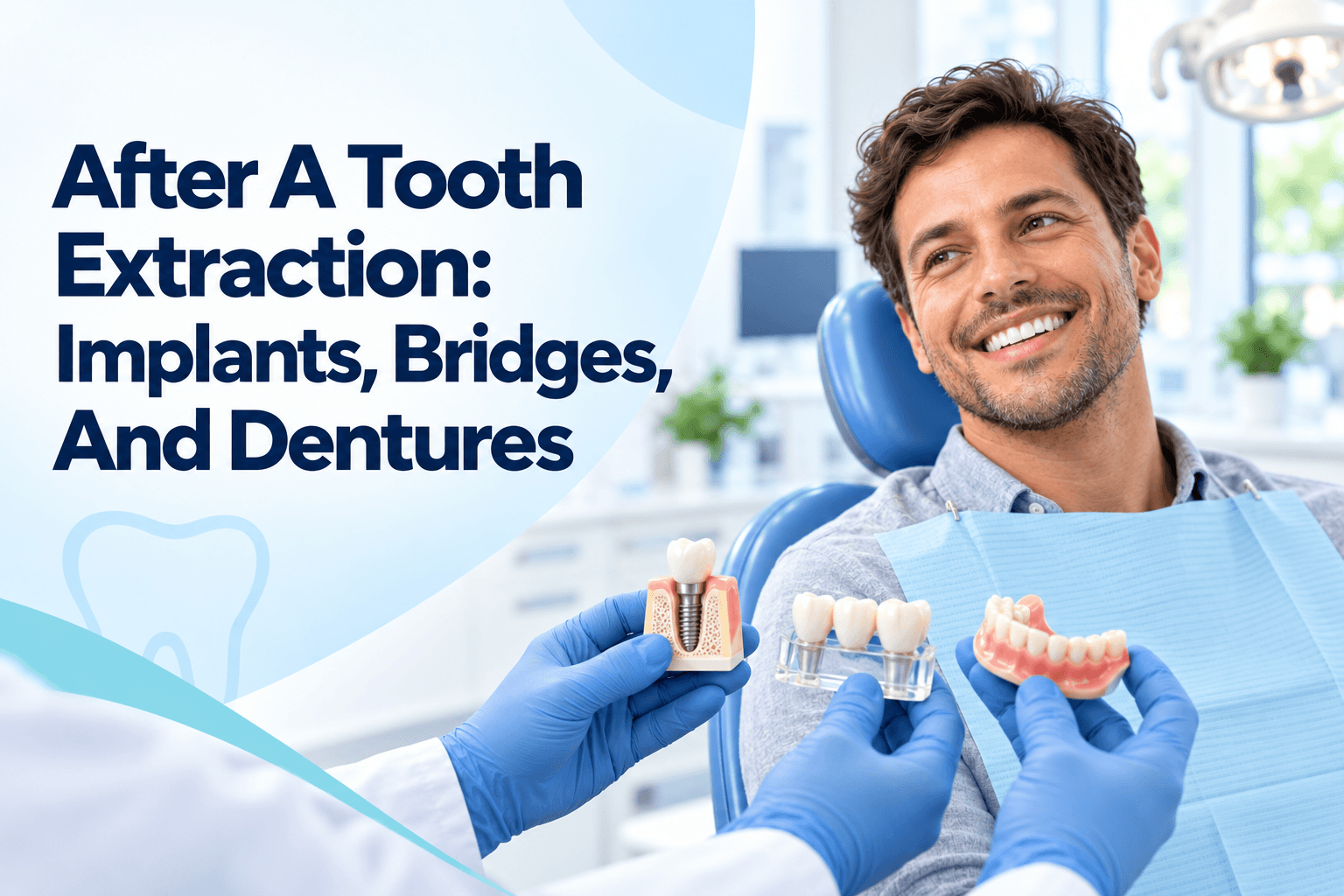
Dental implants can support a replacement crown from within the jawbone. Implant care usually involves planning, placement, healing, and attachment of the final restoration.
Dental crowns and bridges may also be part of treatment. A traditional bridge replaces a missing tooth using neighboring teeth for support, while a crown can protect a natural tooth that remains restorable.
Schedule A Tooth Evaluation In Riverton, Utah
Persistent tooth pain, swelling, or visible damage deserves timely attention. Riverton Heights Dental Care can evaluate the tooth, explain findings, and discuss preservation, extraction, and replacement choices based on your oral health.
Early care may reduce discomfort and preserve healthy structure. Contact the office to schedule an examination if a tooth feels painful, loose, cracked, or infected.